About the Course
This immersion week offers a practical introduction to permaculture through lived experience at Coed Hills, a long-established eco-community and centre for low-impact living.
Rather than separating theory from practice, the course brings them together through daily life. You will learn by doing, observing and reflecting, working with land, food systems and community as part of a shared experience.
It is designed for people who want to explore permaculture in a grounded, realistic way, whether you are new to the approach or looking to deepen your understanding.
What You’ll Experience
Across the week, learning is woven into daily life.
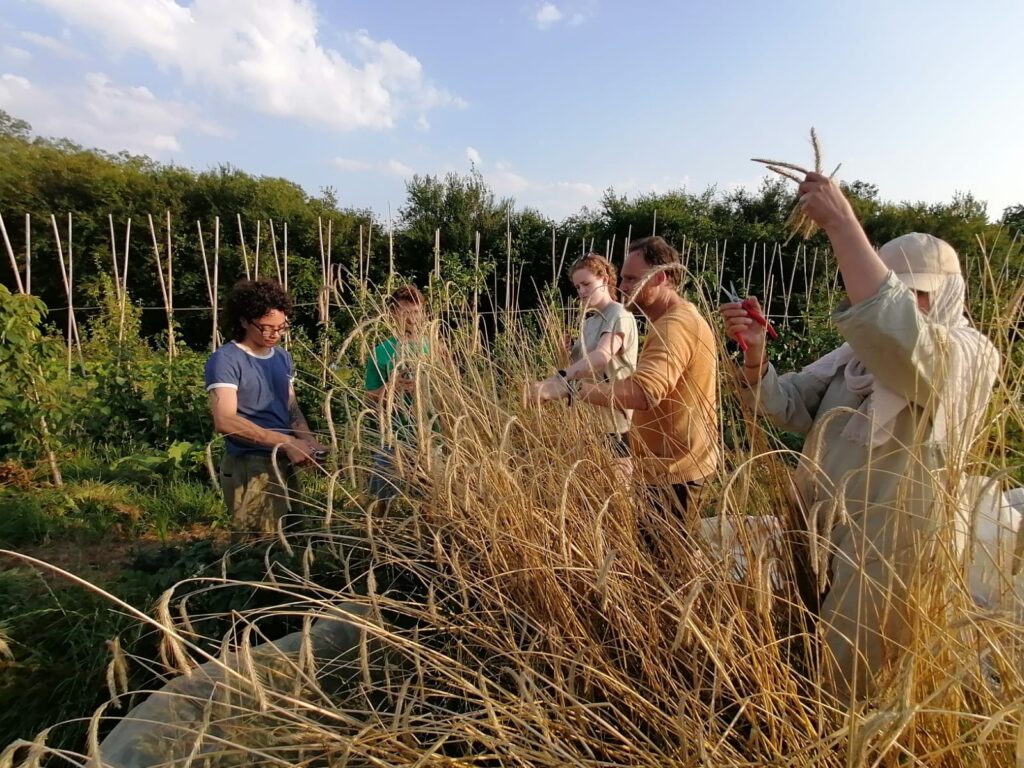
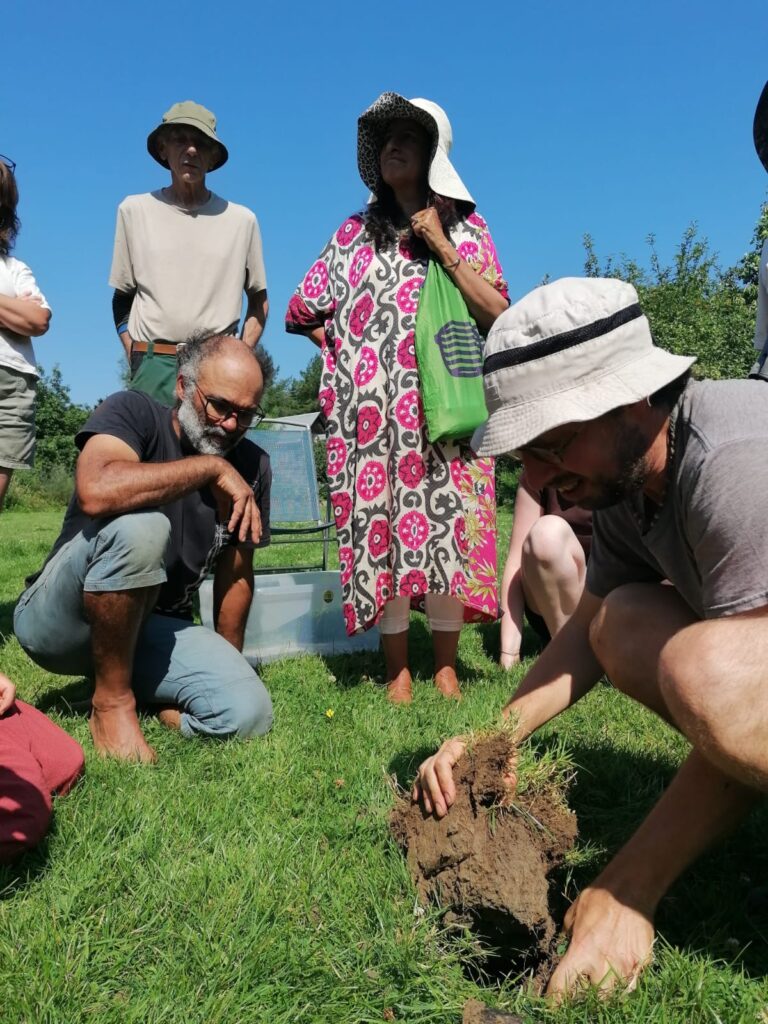
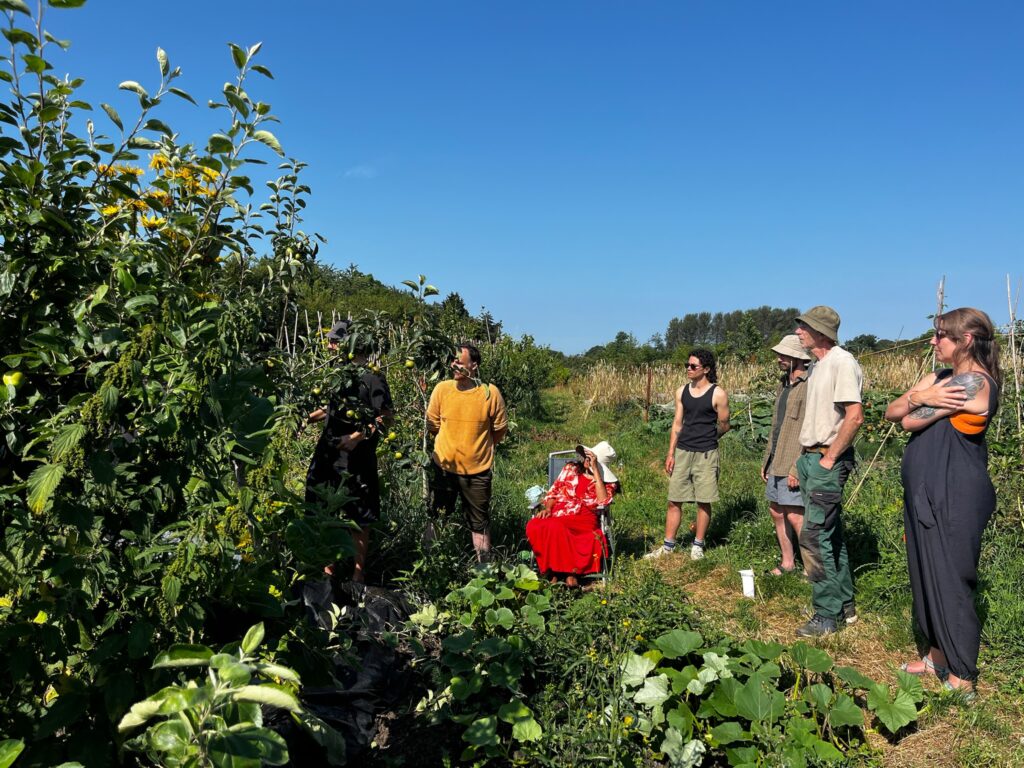
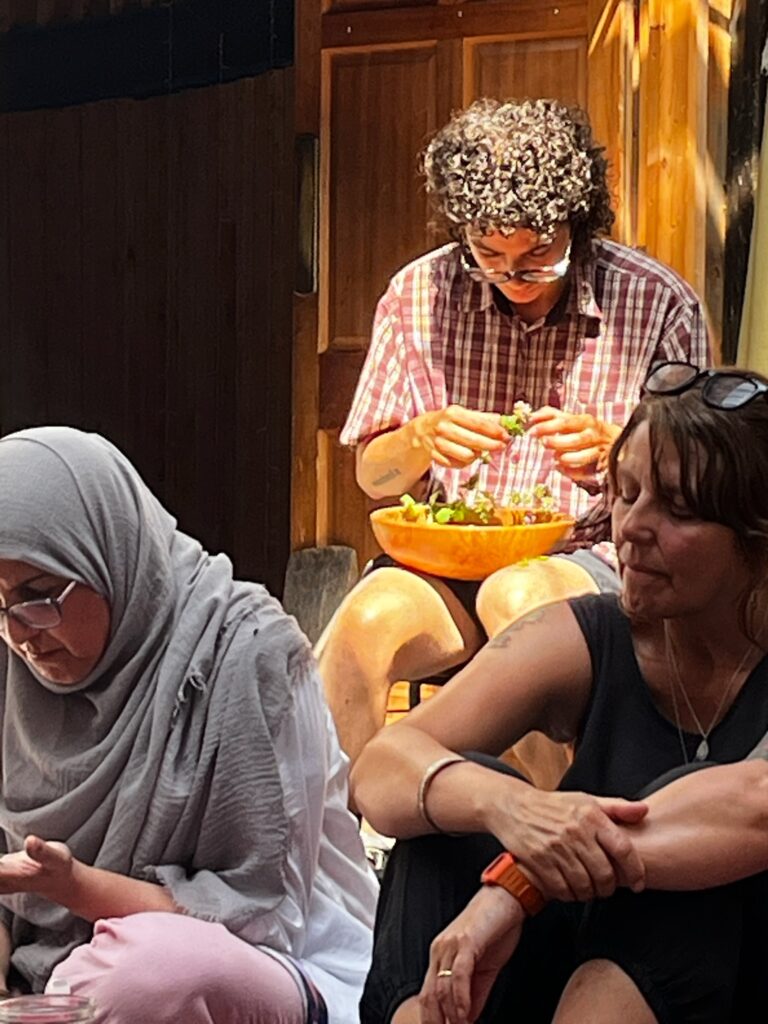
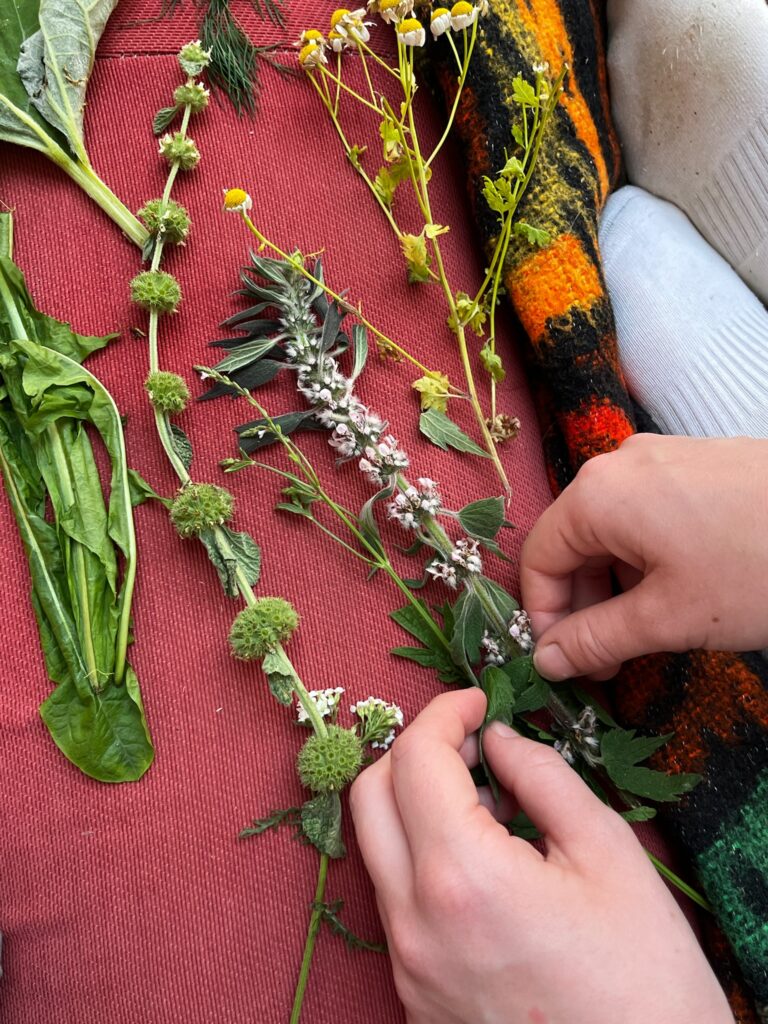
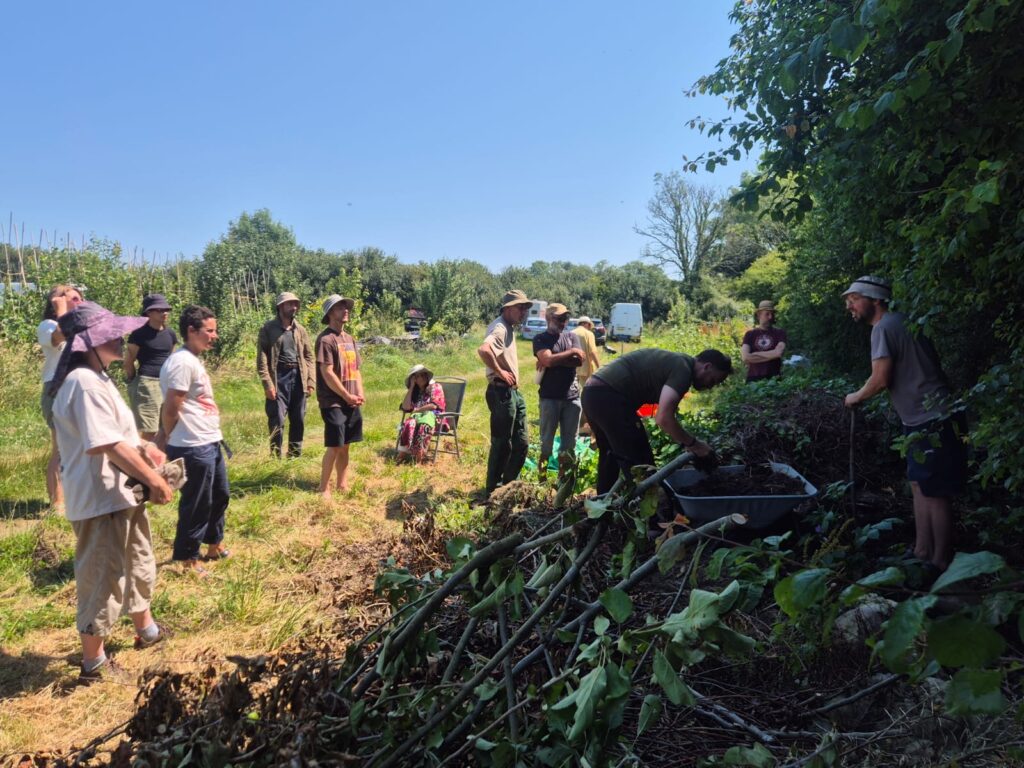
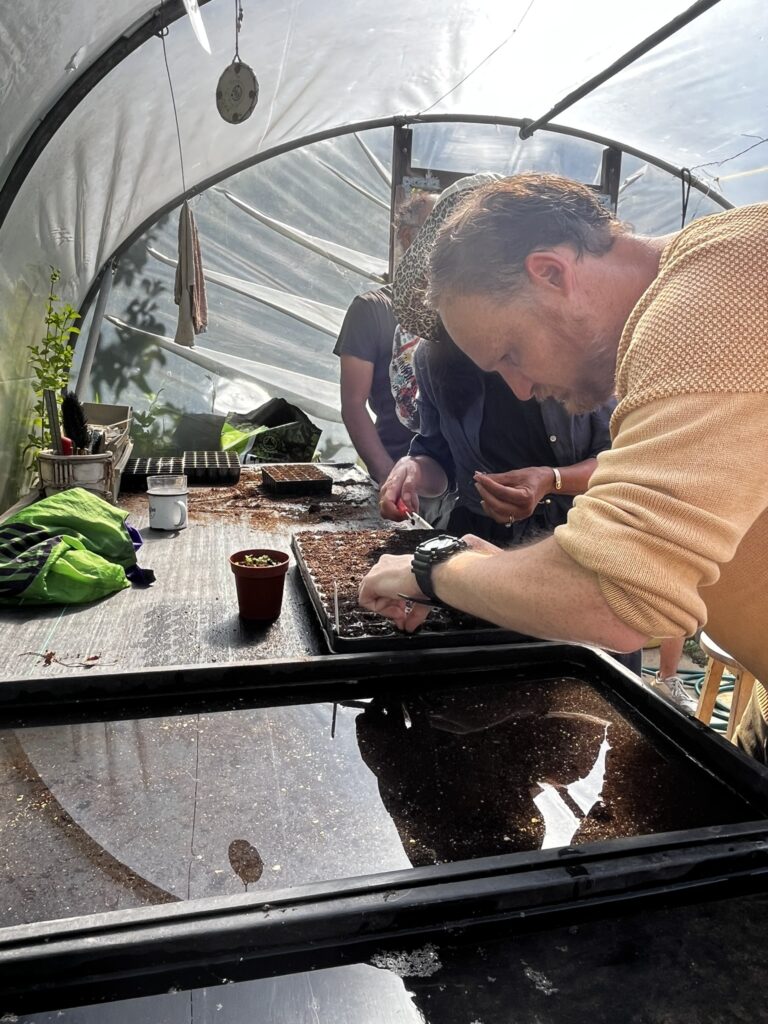
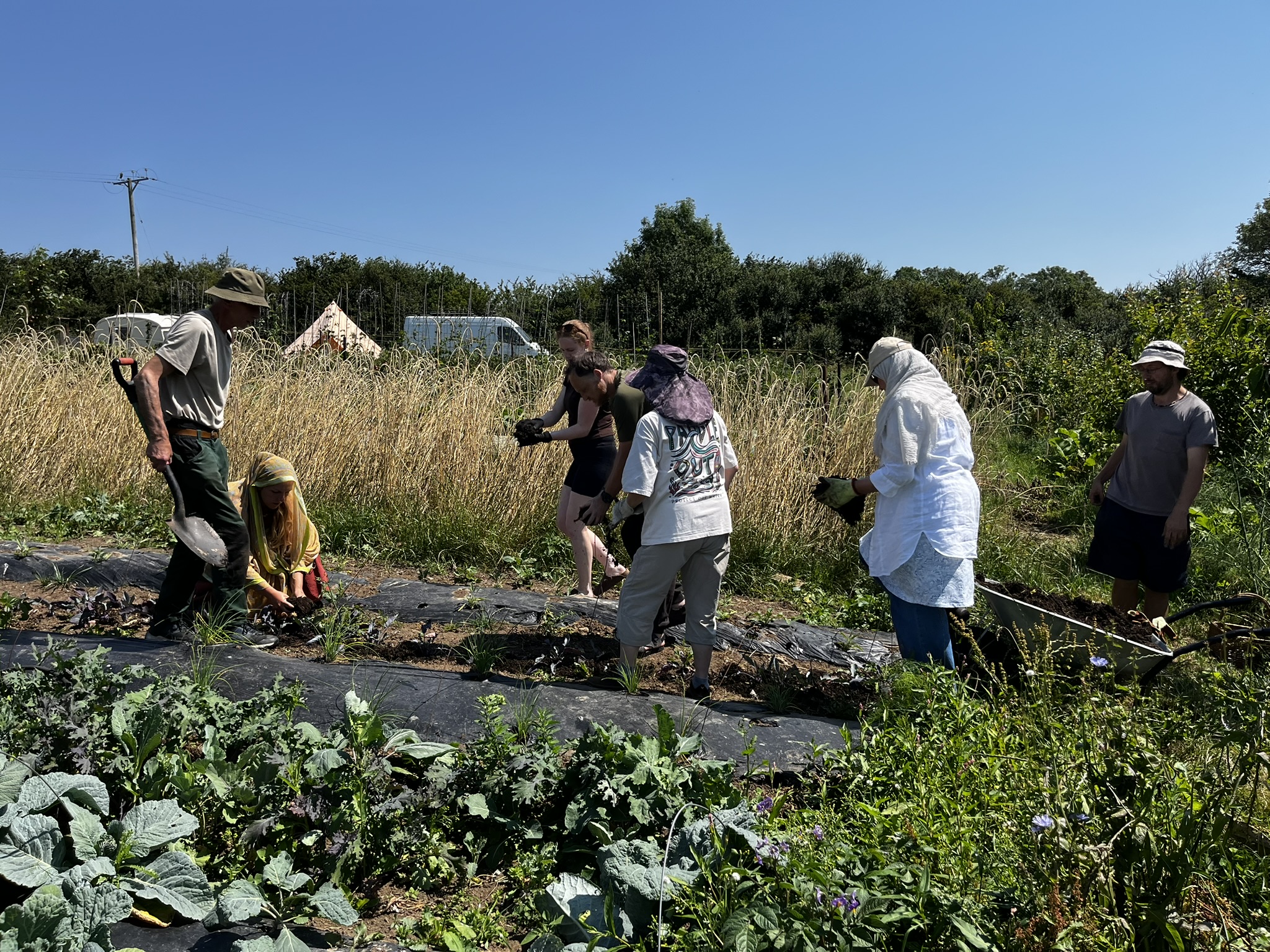
You will spend time working with soil, plants and seasonal rhythms, exploring approaches such as food growing, forest gardening and edible landscapes. Alongside this, you’ll begin to understand how to observe patterns, work with natural systems and apply simple design thinking to your own life or project.
You will explore:
- how to observe and respond to natural patterns
- food growing, forest gardening and seasonal awareness
- practical, hands-on work in gardens, woodland and land-based systems
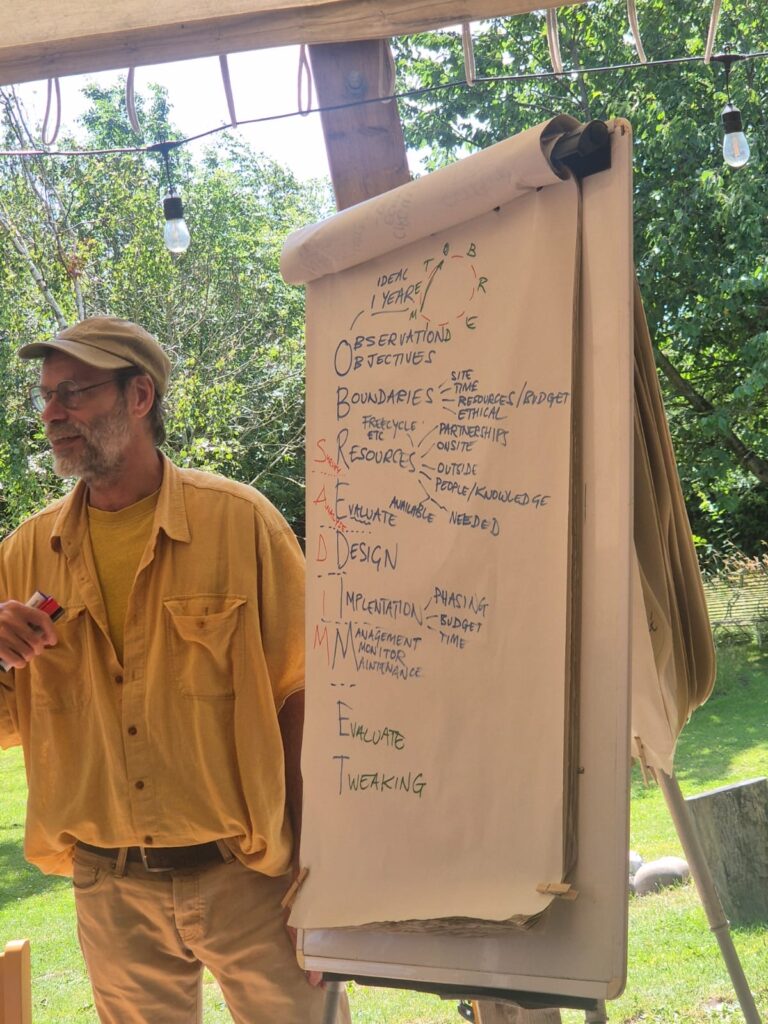
- simple design tools you can apply to your own life or project
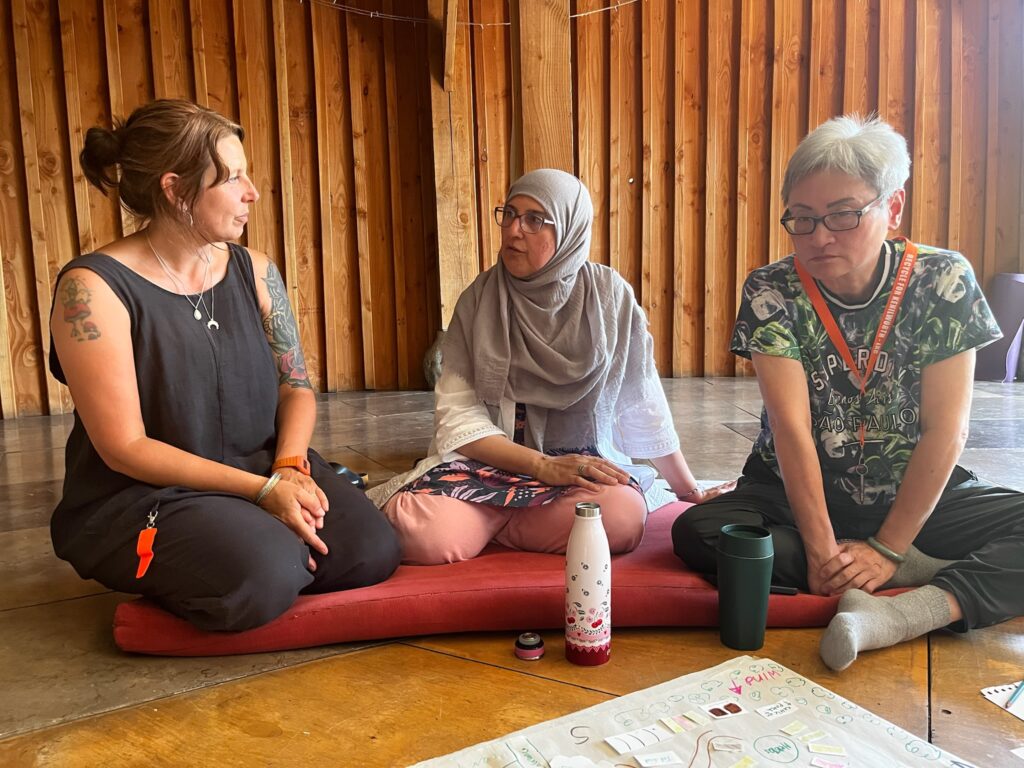
- Group co-coaching and reflection to deepen learning and integration
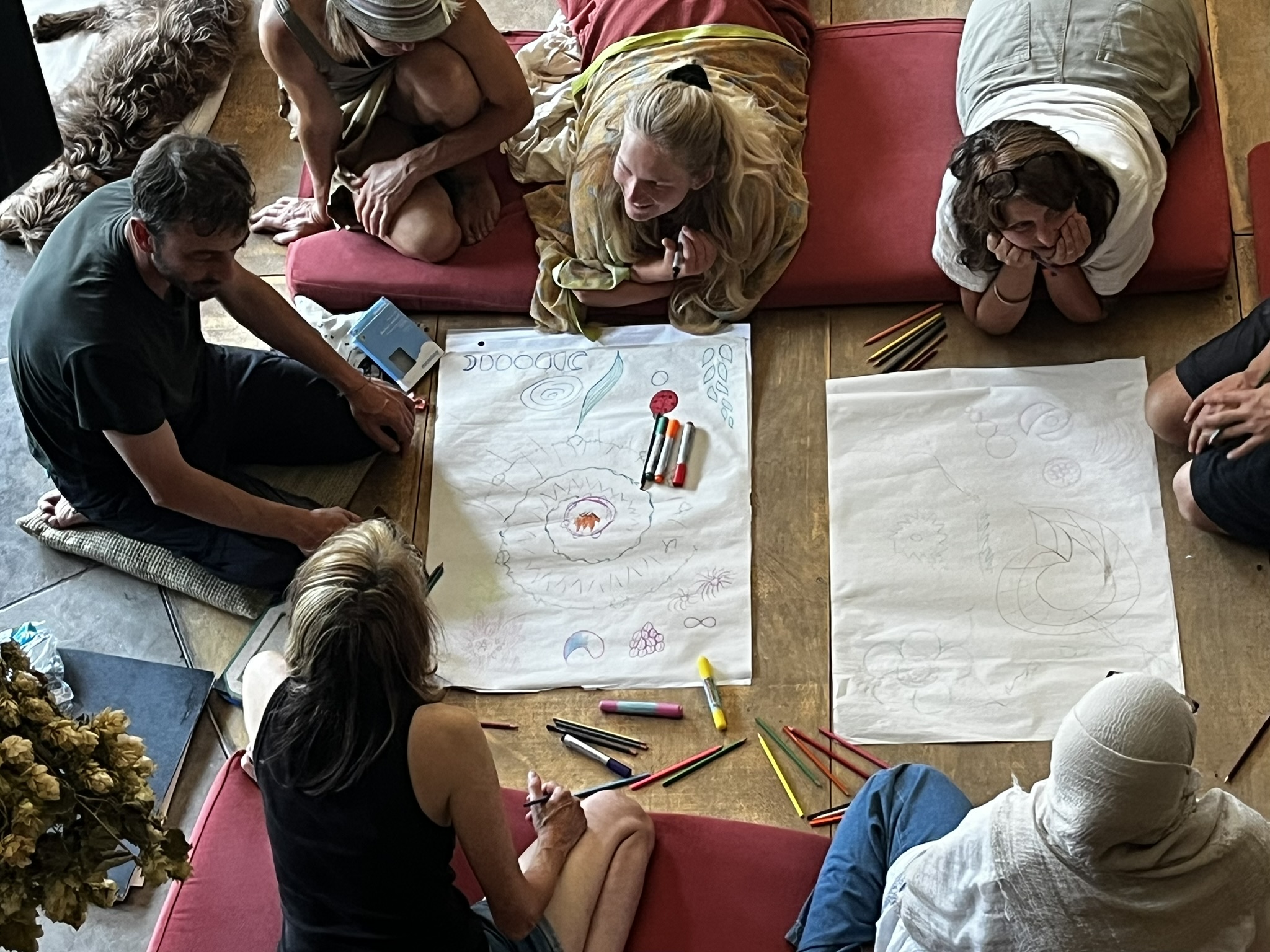
Much of the learning happens through doing. Time in the gardens, woodland and shared spaces is balanced with conversation, reflection and group work, helping you make sense of what you’re experiencing and how it relates to your own context.
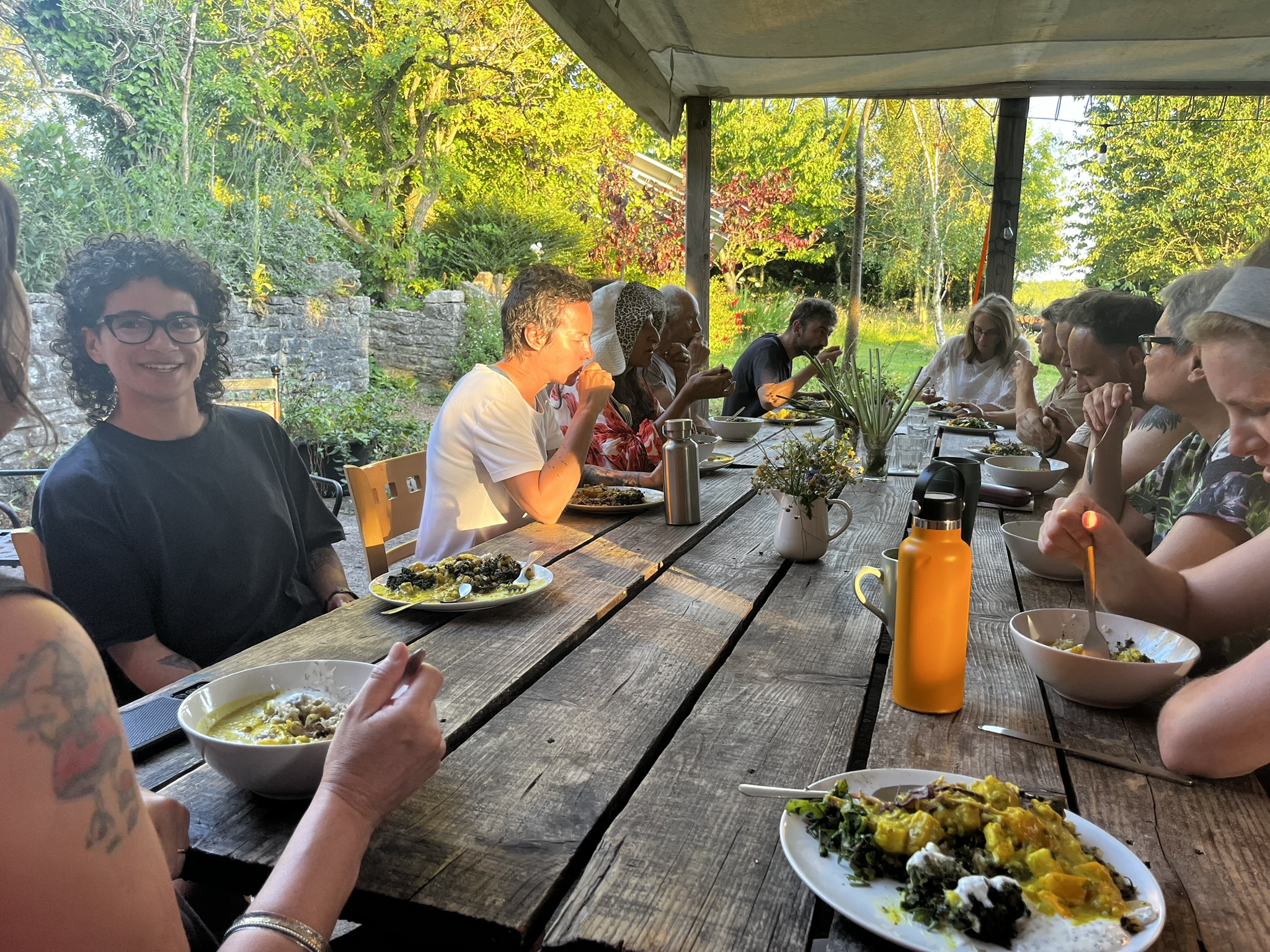
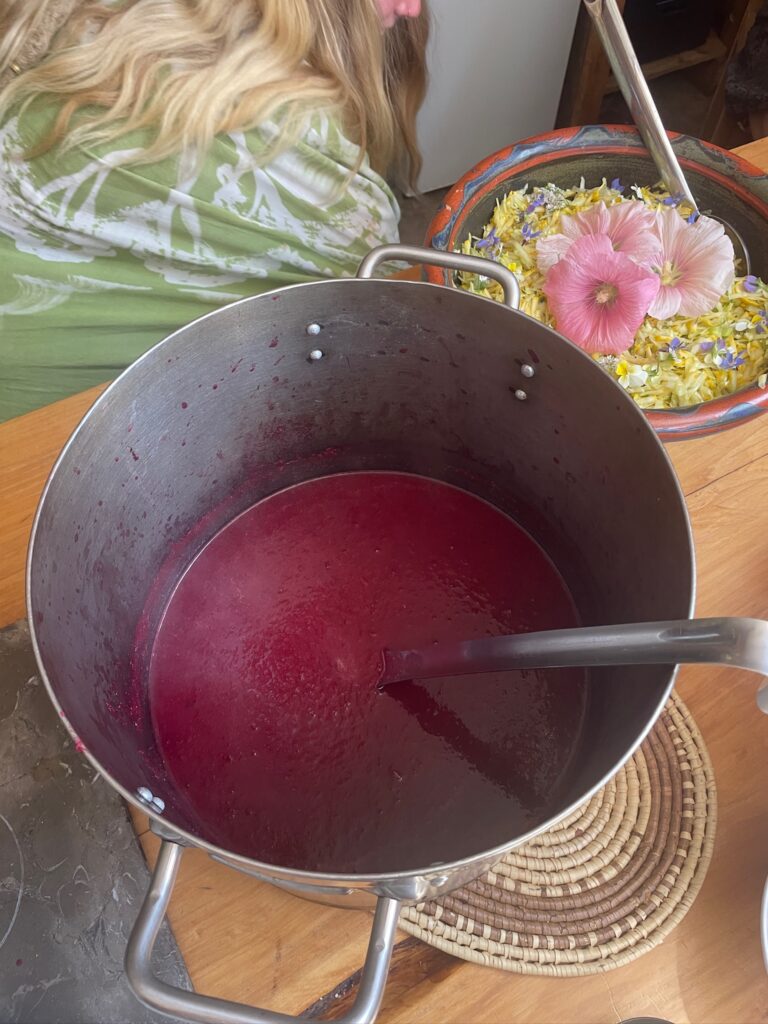
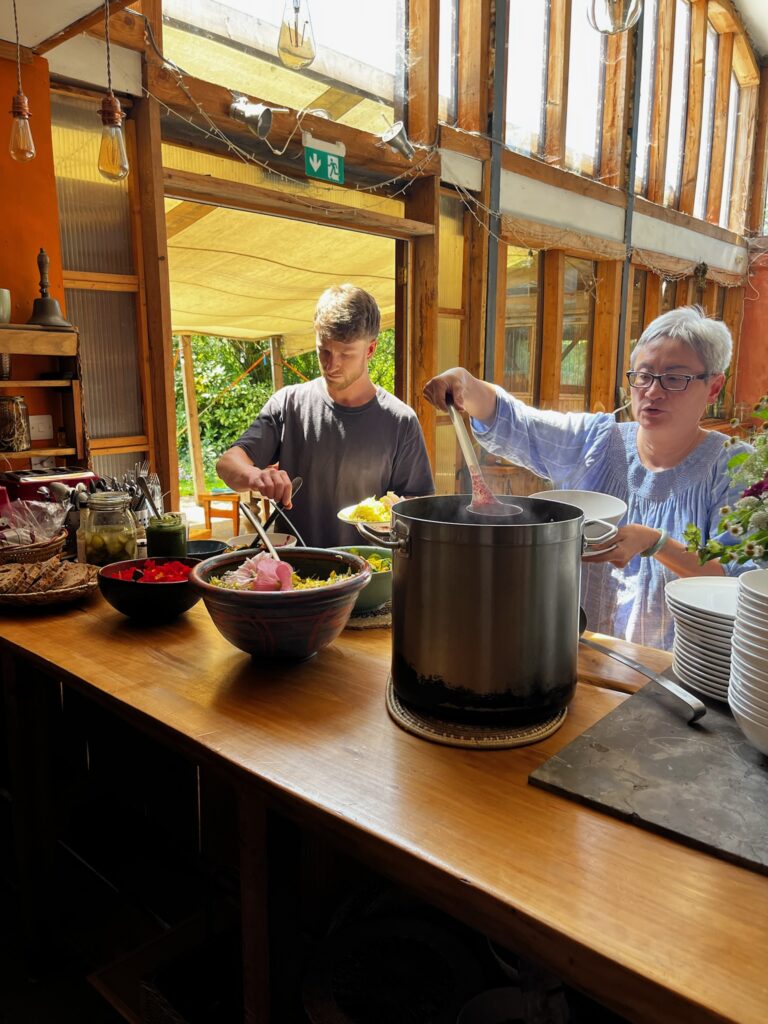
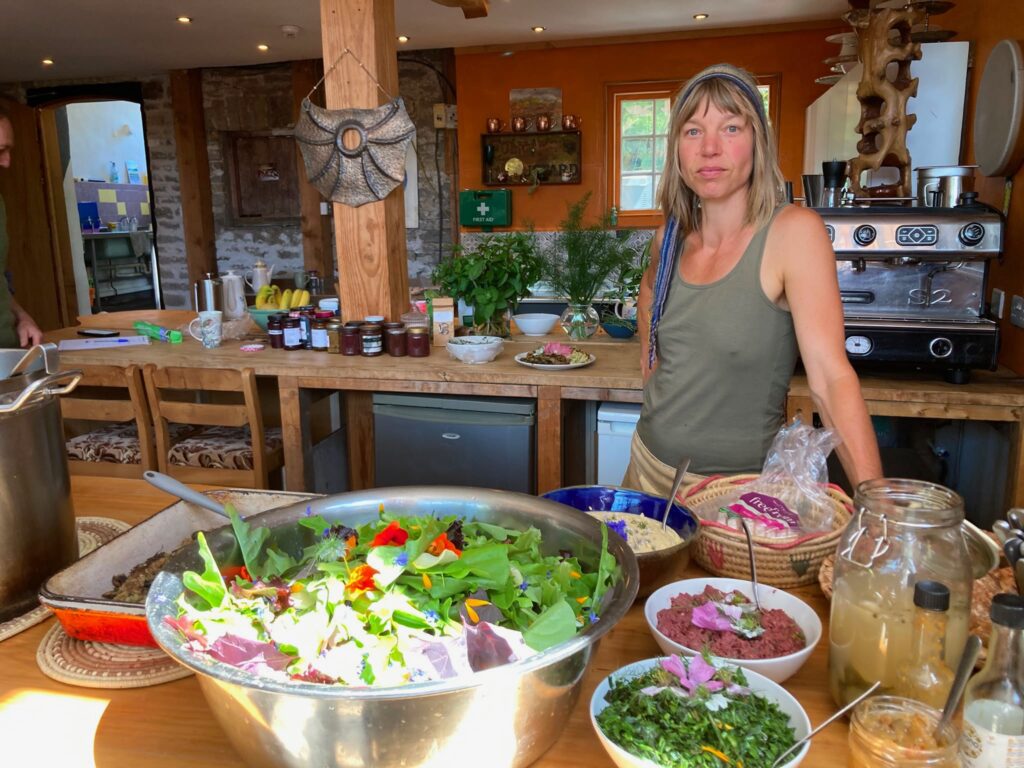
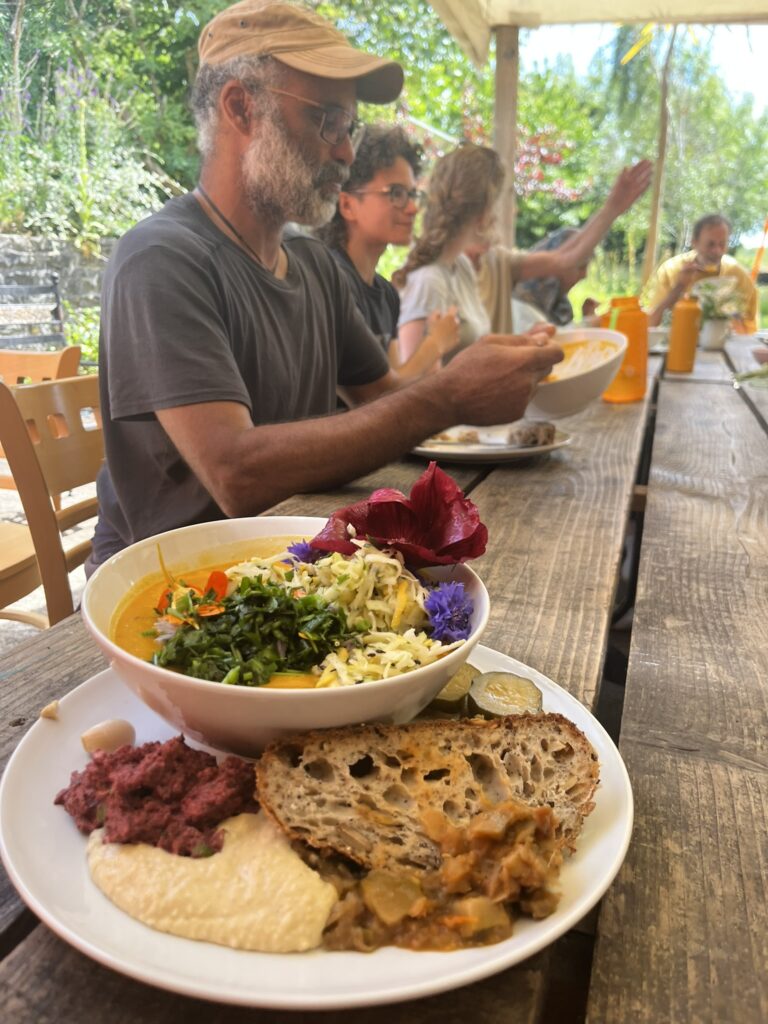
Food is a central part of the week. Growing, preparing and sharing meals becomes part of the learning, connecting practical skills with a wider understanding of nourishment and food culture.
There is also space to slow down and notice what’s happening, both around you and within you. Simple somatic and reflective practices are offered as a gentle way to support awareness, resilience and integration.
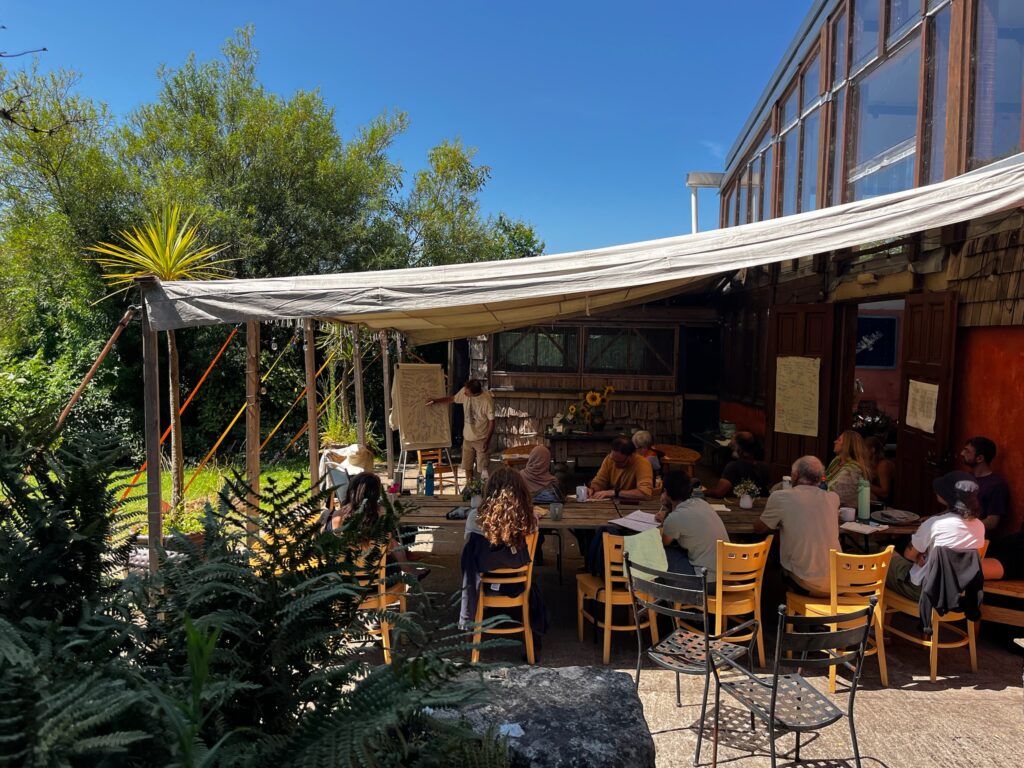
You’ll also take part in interactive design sessions, using real situations and ideas to begin shaping your own next steps.
What You’ll Leave With
By the end of the week, you’ll have a clearer sense of direction, along with practical tools you can begin using straight away. You’ll build confidence in growing food, working with natural systems and making changes in your own life.
Whether you’re exploring this for the first time or already living some of these ideas, the week offers space to step back, take stock and move forward with greater clarity. You’ll also leave with a stronger sense of connection to the land, to others and to what feels possible next.
“I see myself applying permaculture principles to my health and living… a more conscious effort and thinking to where and what I buy… I also see myself starting to use permaculture to grow for myself and family.”
Who Is This For?
This immersion is perfect if you:
- have a project, idea or lifestyle shift you want to explore
- want to learn more about growing food or develop your existing practice
- care about health, wellbeing and living more sustainably
- are curious about permaculture and how it applies in real life
- are considering a full PDC and want to begin working towards that – continue your journey
Not quite ready for a full week?
Our three-day Introduction to Permaculture Immersion in May offers a shorter way to experience our approach to practical growing, permaculture design and learning in community. It can be taken as a course in its own right or as a first step before joining us for the longer immersion in July.
The Cost
We use a tiered pricing model to help make the Permaculture Immersion accessible while ensuring that the people involved in creating and delivering the course are fairly paid.
We ask participants to choose the tier that best reflects their circumstances, trusting that this shared responsibility supports both individual access and the wider learning community.
- £450 / £500 / £550 – Supported rates
If the standard rate would prevent you from taking part, please choose the supported rate that feels manageable for you. Choosing the higher amount where you are able helps us continue to offer places at the lowest rate. - £650 – Standard rate
This is the rate we ask you to pay where possible and reflects the real costs involved in creating and delivering the immersion. - £750 – Pay it forward
If you are able to contribute more, this rate helps us offer supported places to people who might otherwise be unable to attend.
To register your interest email marianne@awildlife.org.uk
Payment Plans
We know that paying the full course fee in one go isn’t possible for everyone. Payment plans are available across all our price options, allowing you to secure your place with a deposit and spread the remaining cost over monthly payments.
If the standard rate is affordable overall but difficult to pay as a lump sum, we encourage you to consider a payment plan before choosing a supported place.
To set up a payment plan please email: marianne@awildlife.org.uk
The Accomodation
Onsite free camping with access to compost toilets, solar showers, washing up facilities, tea and coffee making.
As an optional alternative to camping at affordable additional cost, individual accommodation spaces are dotted throughout the gardens. These can be booked for private comfort and quiet rest, or shared by groups.
More details about the accommodation
Learn more about Permaculture >
More aboout the Coed Hills >
Accessibility & inclusion
We aim to make this course as inclusive and accessible as possible. One of our accommodation options, the railway carriage, is wheelchair accessible. The main teaching space in the barn is also wheelchair accessible, and there is an accessible toilet located there.
If you have access needs or questions not covered here, we warmly encourage you to get in touch before booking. We are happy to discuss what is possible and how we can best support your participation.
The course team includes:
- Steve Charter – (Pc Diploma, 2001)
- Stevie Watts – Stevie leads the Ediculture programme,
- Mathu Bloom – has lived at Coed Hills for almost eight years, in a tiny house she designed and built herself, and works closely with Stevie to maintain the gardens.
- Marianne Lindfield – Marianne has a strong background in community engagement and led the design and development of The Pod Project in Northern Ireland, a local permaculture and wellbeing hub.
More information in About Us
If you’d like to explore the thinking behind our approach to learning, community and care, you might enjoy our reflection Why a Wild Life?

Continue the Journey
If you’d like to continue towards your Permaculture Design Certificate (PDC), the learning hours from this Immersion Week can form part of the new modular PDC pathway overseen by the Permaculture Association (Britain).
You can build on your learning by joining our Returning and Deepening Permaculture Immersion (Part Two), running from 18–23 October 2027 or completing other recognised modules with participating permaculture teachers.
As part of building an ongoing learning community, you’ll also be invited to join our online cohort calls after the immersion, offering a chance to reconnect, share how you’re putting your learning into practice and continue supporting one another.
Participants who complete this Immersion Week can continue with our shorter five-day Part Two immersion in October. Part Two is priced separately to reflect the shorter course, with supported rates and payment plans available to help make continuing towards your PDC more accessible.
Ediculture Seasonal Growing Weekends can also be taken independently and offer an opportunity to deepen your practical growing skills throughout the year.
Please do feel free to book a discovery call and talk to us further if this is of interest.
Join us on the Permaculture Immersion
If this sounds like the kind of learning experience you’re looking for, we’d love you to join us at Coed Hills in July.
Book your place – email marianne@awildlife.org.uk
If you’re unsure whether the three-day May introduction or the full July immersion would suit you best, you’re very welcome to book a discovery call and talk it through with us.
“The community aspect, eating together, getting to connect with people searching for the same things, being held in this space with compassion and love, quite a unique experience overall.”