
Two week-long immersions at Coed Hills this summer, run alongside Ediculture. A personal reflection on food, community, people care and what we learned along the way.
This summer we brought our permaculture teaching to Coed Hills, a long-established eco-community in the Vale of Glamorgan, for the first time. We ran two week-long immersions alongside Ediculture, one in July and one in September, and it was something we had talked about for a long time, so it was lovely to see how well the two fitted together.
People often think permaculture is about gardening, but it is much more than that. It is a design system, an education system and a philosophy, built on three ethics of earth care, people care and fair share, and it can be applied to almost any part of life, from land and food to communities, livelihoods and health. If you’d like to know more, we’ve written about permaculture’s ethics and principles.
Learning from the land
Ediculture is a South Wales charity led by Stevie Watts, and its name comes from “edible” and “culture”. It promotes edible and medicinal horticulture, helping people build practical skills in foraging, growing food, nutrition, herbal medicine and nature connection, with the aim of creating a more regenerative, local food culture. Working with Ediculture meant we didn’t have to talk about permaculture in the abstract. We could look at an idea together, then go out to the forest garden, the market garden, the herbs and the trees and see it in practice. Then we harvested, worked out what to make with what was there, and ate together.
The teaching was a real mix of knowledge and experience, with Steve’s many years of permaculture design and teaching alongside Stevie and Mathu, who know every corner of Coed Hills and what grows there. With Stevie we learned about plants, trees and herbal medicine, often with music and song along the way, and Mathu’s care for the food was in everything, from the flower salads and fresh herb teas to the flowers on the tables. I was there more in a supporting role, looking after the group and making sure everyone could take part in a way that worked for them, and for me that is what people care is really about.

A different way of living, for a week
This was what we had designed the immersion around. We didn’t only want people to learn about permaculture, but to experience living a bit differently for a while, with time outside, good food grown a few steps away, practical skills and a chance to see how much the land can give. Community mattered just as much, and it was something we planned for from the start. There is something restorative about spending time with people who share your values, especially when so much of what we are thinking and talking about can feel hard to carry on your own.
There was a lot of joy in eating together, learning together and having time for conversations. One participant hadn’t been sure whether she would be able to come because of her health, so before the course we talked about what she needed and how she could take part in a way that worked for her. Afterwards she talked about how seen she had felt, and that has stayed with me.

People care is one of the ethics of permaculture, and for me it means paying attention to what is actually happening in the room and responding to it. Quite often a small change is enough to help someone find a way of being there that works for them. It also means not holding on to the plan when it isn’t working. It’s not school, and if someone needs to get up and move, go outside or take some time out, that’s fine, and if we need to change the room, the timing or what we are doing, we can.
July really tested that. It was incredibly hot, so we moved the timetable around and built in more rest, and one participant wrote afterwards that the course had been “intense and flexible around the heat wave”. Another said they would have liked even more time to rest and take things in, which I agree with and want to build in next time. I was also very tired during that first week and couldn’t take part in everything, so I had to practise what we were encouraging everyone else to do and listen to my own body too.
Coming back in September
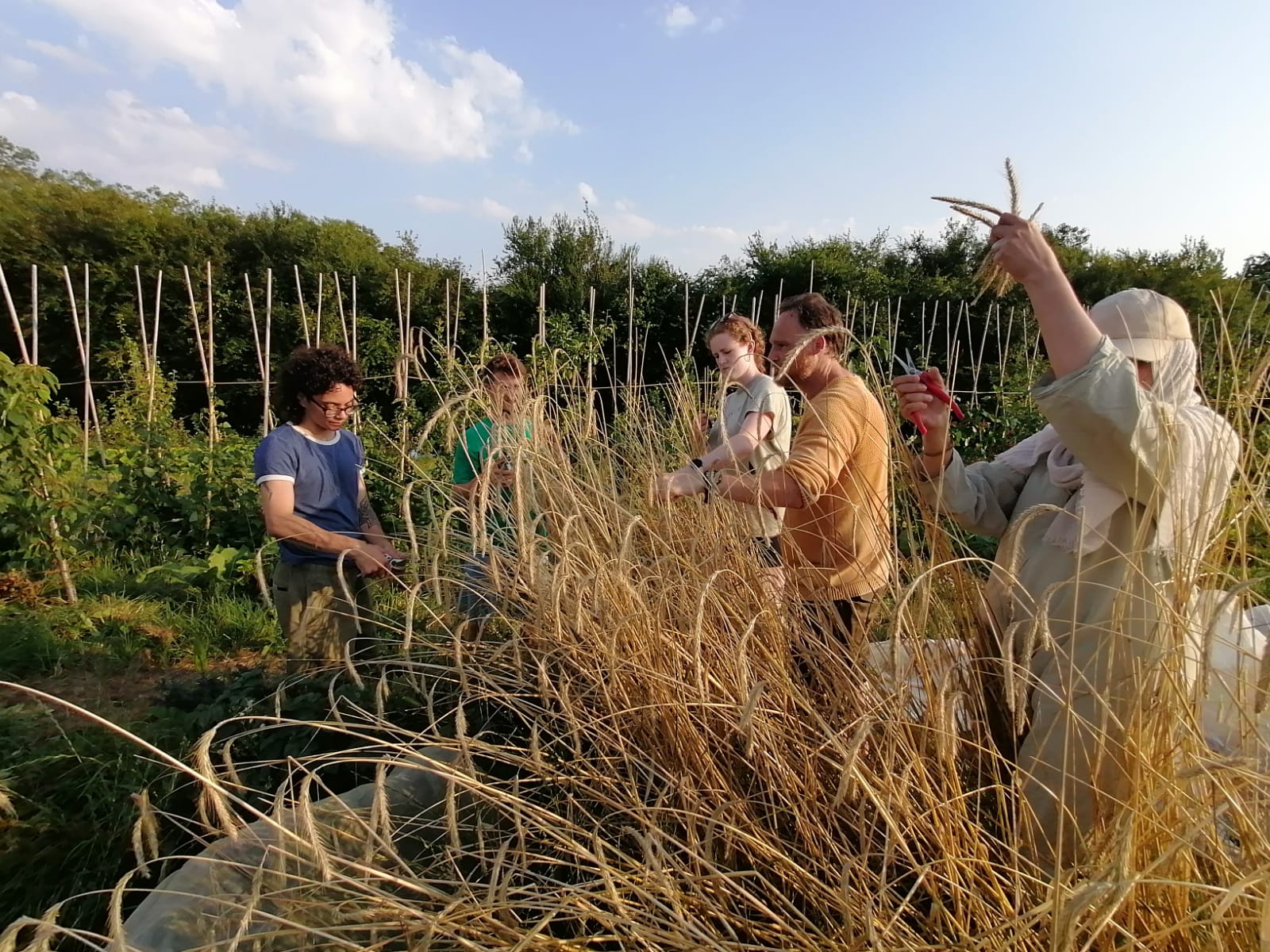
When we came back in September the conditions were completely different. We had stormy nights and one very wet session, but we were also there at harvest time, with lots of fruit to pick from the trees, and some people joined in with the late-night and early-morning harvesting of vegetables for market.
The September immersion had grown out of July, when people asked if they could come back and carry on. We created the Returning and Deepening immersion in response, so that those returning could explore different parts of permaculture and Ediculture and keep working towards their Permaculture Design Certificate, while new people could join us too. I really liked that mix. The returners brought their experience of July and what had happened for them since, and the new people brought different perspectives and energy.
At the start of the week we had planned a fairly short check-in with the returning participants, asking how they had been since July and what they wanted from the second week. It ended up taking nearly two hours. People talked about how hard it had been to go back into everyday life. They had left feeling inspired and wanting to make changes, and some were already starting to create new opportunities for themselves, but they missed the group and being around people who shared their values. They also talked about what they were seeing in the world. The wildfires over the summer had brought the evidence of change very close, and there was a real need to talk about that together.
It reminded me how important it is to have spaces where we can be honest with each other about what is happening and how we feel about it. We don’t always need to have the answers. Sometimes we just need to sit with what is difficult, alongside other people who care about the same things, before we start to think about how we want to respond. Giving that conversation the time it needed felt like part of the learning, and it’s something I would make more space for next time.
The designs
During the week the returning participants also worked on their own designs, and what I loved was how varied they were and how much they reflected what actually mattered in people’s lives. One person was exploring lifestyle changes and how they might help someone feel less angry in the world. Another was designing a safe and beautiful garden for their family in Sudan. There was a community project, and another design looking at how to get the most happiness possible out of a small growing space.
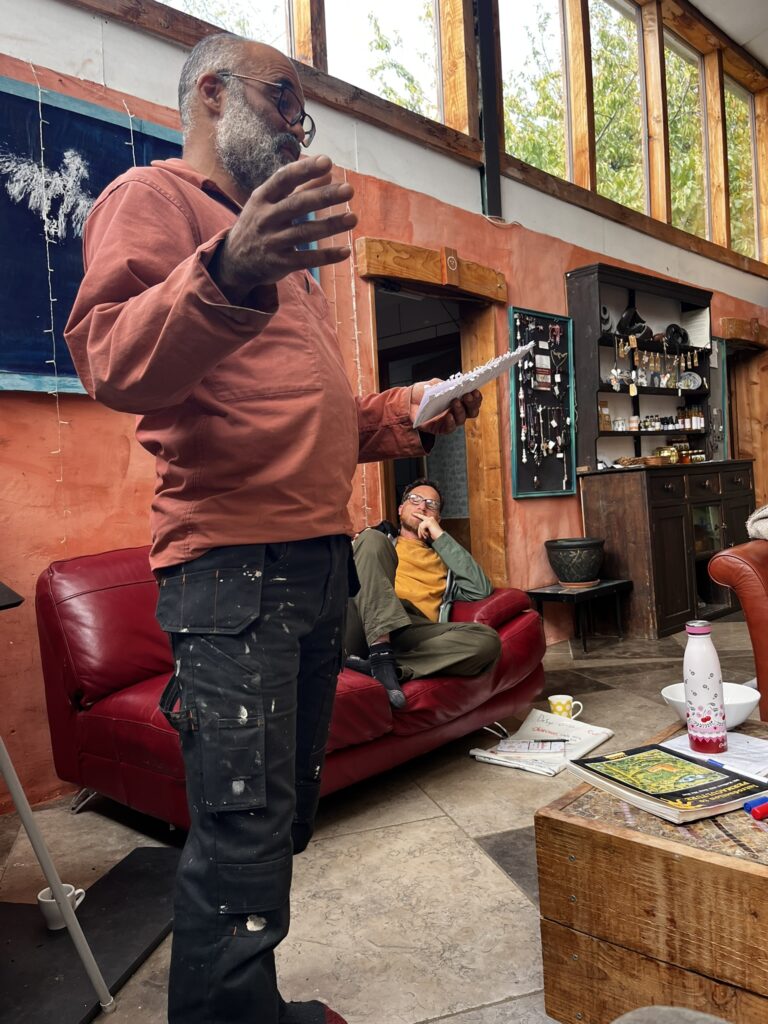
I found the designs very moving. By this point we had all become invested in each other’s ideas and in what happened next, and people were offering their own knowledge, skills, contacts and practical help to take things forward. For me they showed the breadth of permaculture really well, because the same thinking could be applied to a piece of land, a community project, a livelihood, our health or how we want to live.
Alongside the designs we explored the magic of water, how we catch and store resources, and how permaculture principles can help us see what we already have differently. We looked at eco-building and worked on a design project for Coed Hills itself. We were putting the principles into practice in the course too, observing and responding to the weather, people’s energy and what the group needed, even when that meant something different from what was on the timetable. “The problem is the solution” means a lot more when you are actually working with it.
Music, harvests and going home
Participants and volunteers became part of the everyday running of both weeks, which was one of the things I enjoyed most. In July especially, people joined in with harvesting and food preparation, and we cooked with whatever the land had to offer. In September there were more musicians among us, so music and singing became part of many of the evenings, along with long conversations and the sauna.
For me personally, September felt different too. I had more energy than in July and it felt wonderful to be doing this work again. The days were still long and I still needed to rest, but I reconnected with how much I love working with people in this way, watching a group come together, helping to solve problems and having the kind of conversations that only happen when people have enough time with each other.
It has been lovely to hear what people have done since. One participant went home and rewilded her front garden, leaving the yarrow and plantains she had learned to recognise, and explaining to her neighbours why. Now some of them are thinking about doing the same to feed the bees. Another described the experience as:
“The community aspect, eating together, getting to connect with people searching for the same things, being held in this space with compassion and love, quite a unique experience overall.”
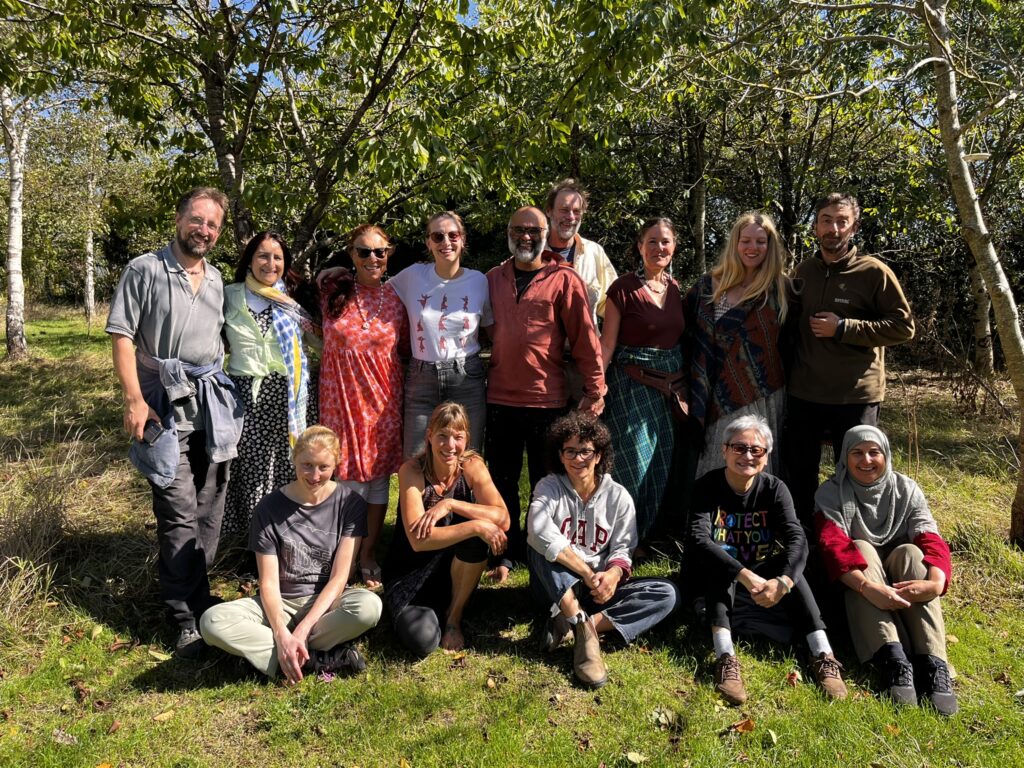
For me it was the joy of sharing so much with everyone: the food, the plants, the knowledge and skills, the music, the ideas and all the different perspectives. I feel very grateful for everything that was shared, given and received over those two weeks.
Join us in 2027
In 2027 we are running the immersions in two places. We’re going back to Coed Hills, and we’re also running them at Goat Grid, a six-year-old food forest at the foot of the South Downs near Lewes, inspired by syntropic agroforestry.
At Goat Grid, the Permaculture Immersion Week runs from 18th to 24th May, with Part Two from 18th to 22nd August. At Coed Hills, the Immersion Week runs from 12th to 18th July, followed by the Returning and Deepening immersion from 18th to 23rd October.
→ Permaculture Immersion Week at Goat Grid
→ Permaculture Immersion Week at Coed Hills
If you are curious but not ready for a full week, there are shorter ways to try it: a two-day Intro Weekend at Goat Grid on 24th–25th April, or a three-day Introduction at Coed Hills in May. You’re also very welcome to book a discovery call and talk it through with us.
Leave a Reply